Retiring or Getting Out of the Military? Your Orders Can Still End Your Lease
Under the SCRA, retirement and separation orders count for ending a home lease early with no termination fee. Car leases have a stricter rule.
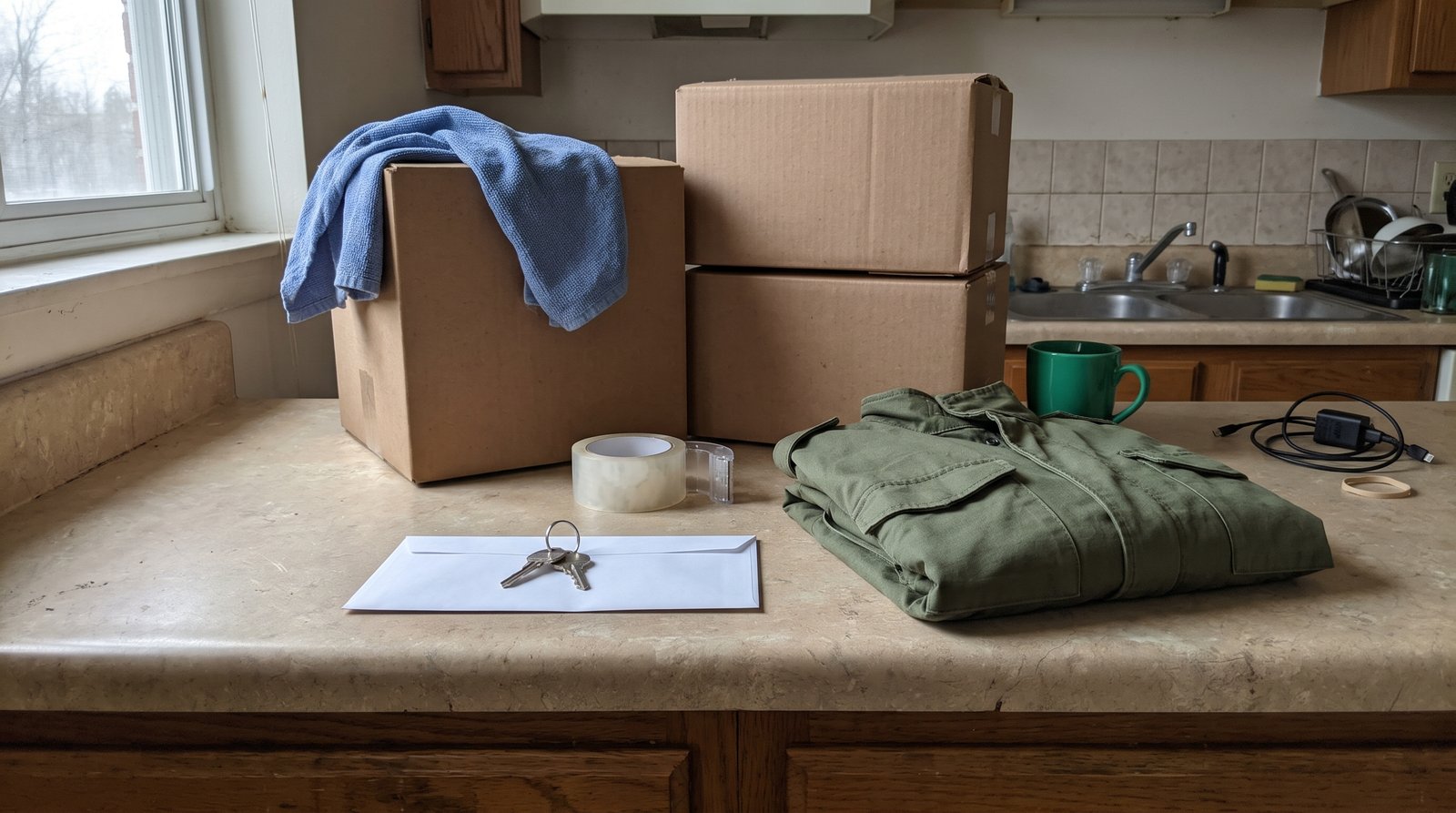
You’ve got your retirement or separation orders. You’re moving home, or to wherever the next job is. Your apartment lease still has eight months on it, and the leasing office says you owe a two-month break fee because “this isn’t a PCS.” If you signed that lease while serving, the leasing office is likely wrong, and the Justice Department just put it in writing.
On November 10, 2026, DOJ’s Civil Rights Division published two new fact sheets for servicemembers: one on ending home leases early, one on ending vehicle leases early. The point it chose to stress in its announcement is that retirement and separation orders are eligible military orders for lease termination under the Servicemembers Civil Relief Act. DOJ also said plainly that landlords and leasing companies may not recognize them, because they aren’t typical PCS orders.
I’m an Army veteran myself, so this one matters to me. The cost of not knowing it doesn’t stop at the break fee. An illegal fee you never paid can end up with a debt collector, and then on your credit report, right when you’re applying for a civilian apartment, a car loan or a VA mortgage.
What the law actually says
The rule lives in 50 U.S.C. § 3955. Here are the parts that matter.
Retirement and separation count. Section 3955(i)(3) says a “permanent change of station” includes separation or retirement from military service. Section 3955(i)(1) defines military orders to include orders for separation or retirement, or a letter from your commanding officer about your current or future duty status.
Which home leases are covered. Under § 3955(b)(1)(B), the lease qualifies if you signed it while you were in military service and then received PCS orders or deployment orders for at least 90 days. A lease you signed before you came on active duty is covered too, under § 3955(b)(1)(A). It covers houses and apartments, and also professional, business and agricultural leases. Watch the order of events: the rule is written for a lease you signed first, with the orders coming after.
No early termination charge. Section 3955(e)(1) says the landlord “may not impose an early termination charge.” You still owe rent up to the termination date, prorated, plus real damage like excess wear and tear. DOJ’s fact sheet adds that the landlord can’t make you repay move-in concessions, and can hold back your security deposit only for damage or back rent.
Prepaid rent comes back. Under § 3955(f), rent you paid for any period after the termination date must be refunded within 30 days.
Your spouse is covered. Under § 3955(a)(2), ending the lease ends any obligation your dependent has on it. You also don’t need a “military clause” in the lease. The federal law applies anyway.
How to do it
Section 3955(c) lays out the steps, and they’re simple.
- Write a short notice saying you’re terminating the lease under the SCRA, 50 U.S.C. § 3955.
- Attach a copy of your orders, or a letter from your commanding officer.
- Deliver it by hand, by private carrier, by certified mail with return receipt requested, or electronically to an address or portal the landlord uses. Keep proof of delivery. DOJ says the same thing: always save proof.
The timing trick nobody explains
For a lease with monthly rent, § 3955(d)(1)(A) says termination takes effect 30 days after the next rent due date following delivery of your notice. That one sentence can cost or save you a full month.
Here’s the arithmetic. Say rent is due on the 1st. If your notice gets there on November 30, the next rent due date is December 1, and the lease ends December 31. If your notice gets there on December 2, the next due date is January 1, and the lease ends January 31. Two days of delay, one more month of rent. If your rent is $1,500, that’s $1,500 for mailing late.
So the day your orders are in hand, send the notice. Don’t wait until you’ve packed.
Car leases are stricter
This is where people get tripped up. For vehicle leases, retirement and separation orders count only if they also involve a big move. Under § 3955(b)(2)(B), the PCS has to take you from the continental United States to somewhere outside it, or from a state outside the continental U.S., like Hawaii or Alaska, to anywhere outside that state. Deployments of at least 180 days also qualify. DOJ’s vehicle fact sheet says the same thing.
So if you’re retiring from a base in Texas and moving to Ohio, the SCRA won’t end your car lease. If you’re separating in Hawaii and moving back to the mainland, it can.
When it does apply, you return the vehicle within 15 days of giving notice, under § 3955(c)(1)(B). Section 3955(e)(2) bans the early termination charge but lets the lessor bill taxes, title and registration, unpaid tickets, and reasonable charges for excess wear, use and mileage. DOJ’s fact sheet also says you get any prepaid lease money back and a prorated refund of a capitalized cost reduction, which is the down payment that lowered your monthly bill.
When a dealer gets it wrong
This isn’t theory. On July 30, 2026, DOJ announced a settlement with Holmes Motors Inc., a “lease here, pay here” dealer with lots in Mississippi, Alabama and Georgia. DOJ alleged the company didn’t refund security deposits and prepaid lease amounts to servicemembers who ended five leases early on qualifying orders, and that it repossessed three servicemembers’ vehicles without court orders. The company agreed to pay $77,348 to the servicemembers and a $60,000 civil penalty. A settlement is not a finding that the company broke the law.
DOJ also says it has recovered more than $490 million for more than 153,000 servicemembers under the SCRA since 2011. My own division puts that at a little over $3,200 per person, on average.
If the break fee shows up on your credit report
If a landlord charged you a termination fee the SCRA bans and sent it to collections, you have two tools.
Dispute it with the bureaus. Under the Fair Credit Reporting Act, 15 U.S.C. § 1681i(a)(1)(A), each bureau has to run a free reinvestigation, generally within 30 days. Send a copy of your notice, your proof of delivery and your orders. A dispute is a request for an investigation, not a promise of removal, and results vary.
Tell the collector it’s not owed. The Fair Debt Collection Practices Act, 15 U.S.C. § 1692f(1), bars a collector from collecting any fee that isn’t allowed by the agreement or permitted by law. A fee federal law bans is not permitted by law.
You can also go after the landlord directly. Under 50 U.S.C. § 4042, anyone harmed by an SCRA violation can sue for damages and other relief, and the court can award attorney fees. Before that, go to your base legal assistance office, which is free. Find one at legalassistance.law.af.mil. If you’re not eligible for military legal help, DOJ takes complaints at civilrights.justice.gov/report.
For the record, CreditShield offers a free do-it-yourself credit app, but you don’t need it for any of this. A letter, copies of your papers and a stamp do the job. If you hit a wall, bring it to our free community on Skool.
This is education, not legal advice.
Sources
- Justice Department Issues Fact Sheets About Lease Terminations for Servicemembers and Their Dependents — U.S. Department of Justice, Office of Public Affairs, Press Release 26-1335, 2026-11-10
- Know Your Rights: Ending Residential Leases Early as a Servicemember — U.S. Department of Justice, Servicemembers and Veterans Initiative, 2026-11-10
- Know Your Rights: Ending Vehicle Leases Early as a Servicemember — U.S. Department of Justice, Servicemembers and Veterans Initiative, updated 2026-11-10
- Auto Dealership to Pay Over $137,000 for Mishandling Servicemembers’ Vehicle Leases — U.S. Department of Justice, Office of Public Affairs, 2026-07-30
- 50 U.S. Code § 3955, Termination of residential or motor vehicle leases — Legal Information Institute, Cornell Law School, accessed 2026-11-16
- 50 U.S. Code § 4042, Private right of action — Legal Information Institute, Cornell Law School, accessed 2026-11-16
- 15 U.S. Code § 1681i, Procedure in case of disputed accuracy — Legal Information Institute, Cornell Law School, accessed 2026-11-16
- 15 U.S. Code § 1692f, Unfair practices — Legal Information Institute, Cornell Law School, accessed 2026-11-16